How Butler Handled Super Typhoon Ragasa: A Case Study in Emergency Operations
When the T10 signal was raised for the world's most powerful storm of 2025, Butler's emergency protocol activated across 29 estates simultaneously — notifying 12,000+ tenants and coordinating 200+ staff in under 3 minutes.
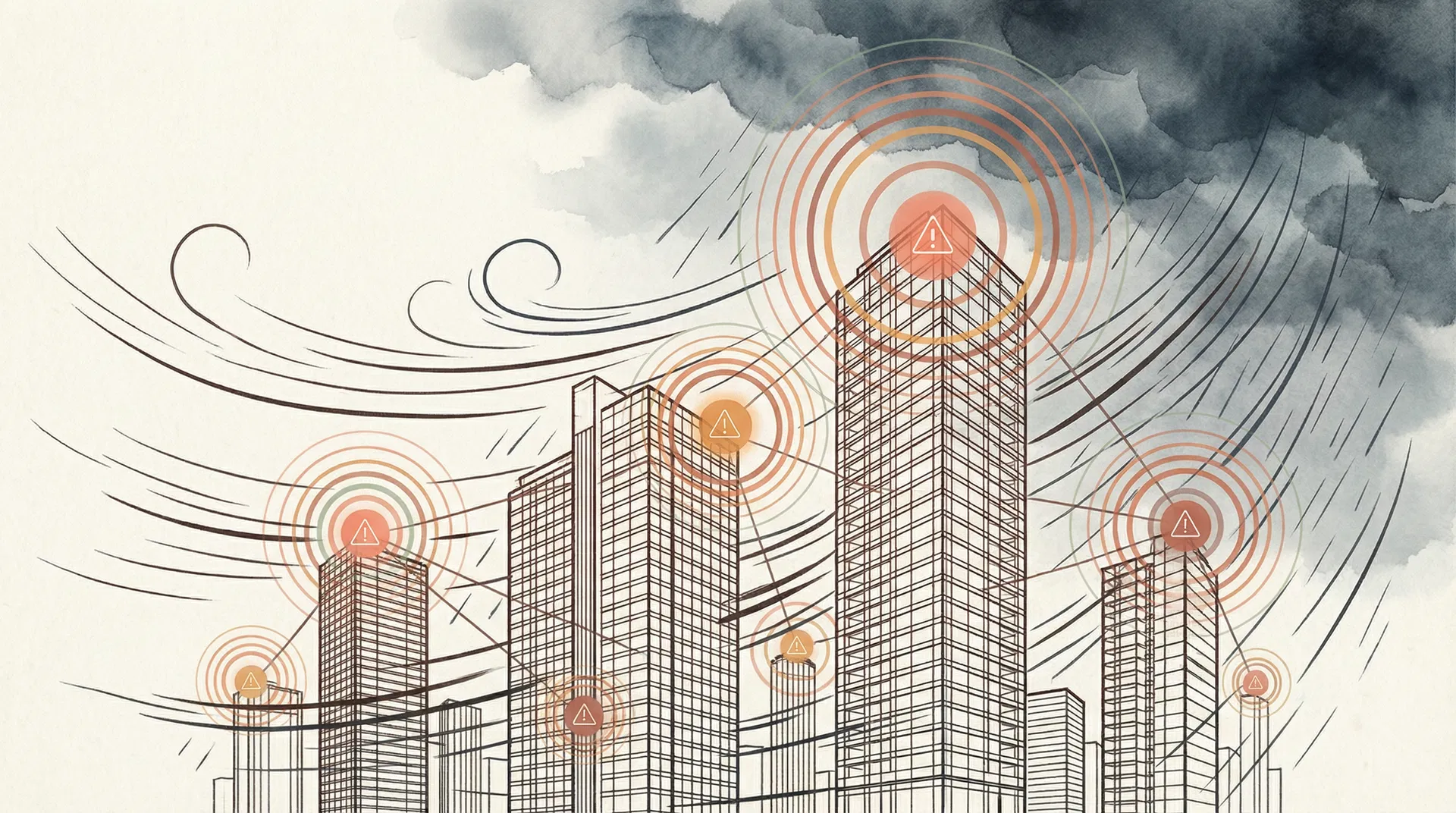
On September 23, 2025, the Hong Kong Observatory raised Typhoon Signal No. 8 at 2:20pm as Super Typhoon Ragasa — the most powerful storm on Earth that year — bore down on the city. By nightfall, the signal had been escalated to T10, the highest warning level, as hurricane-force winds exceeding 210 km/h lashed Hong Kong. For property management teams across the city, this triggered the most extreme operational scenario they face: coordinating emergency protocols across multiple sites, notifying thousands of tenants, and managing real-time safety operations — all while dealing with catastrophic weather conditions, widespread flooding, and infrastructure disruptions.
For 29 residential estates managed through Butler's Building Intelligence System, the response was automatic, coordinated, and fully documented.
T-Zero: Signal 8 Raised
Within 90 seconds of the official Signal 8 announcement, Butler's emergency protocol engine activated across all 29 estates simultaneously. The system executed three parallel workflows:
Tenant Notification. 12,847 tenants received personalized WhatsApp messages in their preferred language (English, Cantonese, or Mandarin) containing: confirmation of the typhoon signal, building-specific safety instructions, emergency contact numbers, and a link to real-time updates. Delivery confirmation showed 94% of messages were read within 15 minutes.
Staff Coordination. 214 on-duty staff members across all sites received their individual emergency checklists via WhatsApp. Each checklist was customized to the staff member's role and building: security guards received perimeter check protocols, maintenance teams received equipment securing procedures, and management received escalation contacts and reporting templates.
Vendor Alert. 38 emergency contractors (structural engineers, electricians, plumbers, and glass repair specialists) received standby notifications with estimated response requirements based on each building's risk profile.
The First Hour: Coordinated Execution
As staff executed their checklists, Butler tracked completion in real time. Property managers could see, at a glance, which buildings had completed their emergency preparations and which required attention.
At the Henderson Land H-Collection estates, the 14-item typhoon checklist was completed across all 29 properties within 47 minutes. Each completed item was timestamped, photographed where required, and logged permanently. When a security guard at one estate reported a loose scaffolding structure on an adjacent construction site, Butler automatically escalated the report to the building's structural engineer and the relevant government department, attaching photos and GPS coordinates.
During the Storm: Real-Time Response
As Ragasa made its closest approach — passing just 120 km south of Hong Kong with super typhoon intensity — tenant messages increased by 1,200% compared to normal volume. With the T10 signal in force, flooding in Sha Tin and storm surges crashing through waterfront areas, Butler's AI handled the unprecedented surge without degradation:
- Automated responses for common queries (estimated signal duration, building closure status, emergency numbers) were delivered instantly.
- Genuine emergencies (water ingress reports, structural concerns, medical situations) were flagged and routed to on-duty managers within seconds.
- Pattern detection identified that five buildings in the Sha Tin district were reporting similar flooding and water ingress patterns from the storm surge along Shing Mun River, suggesting a district-level infrastructure failure rather than individual building problems. This insight was escalated to the portfolio manager, who coordinated a district-level emergency response with government agencies.
Throughout the storm, every tenant interaction, staff action, and vendor communication was captured and indexed. No information was lost, no request went untracked, and no decision went undocumented.
After the Storm: Recovery and Documentation
When the T10 signal was finally lowered on September 25 — after nearly two days of disruption — Butler automatically initiated recovery protocols: damage assessment checklists were distributed to site teams, tenant follow-up messages were sent to anyone who had reported issues during the storm, and a comprehensive incident report was generated for each property.
The incident reports — which would typically take property managers 3-5 days to compile manually after a T10 event — were available within 45 minutes of the all-clear. Each report included a timeline of all actions taken, photos of any damage, vendor response times, tenant communication logs, and flood damage assessments. These reports were immediately usable for insurance claims and regulatory compliance — critical given that Ragasa caused an estimated HK$2 billion in damage across the city.
The Numbers
Across all 29 estates during Super Typhoon Ragasa:
- 12,847 tenants notified in under 3 minutes
- 214 staff coordinated with personalized checklists
- 94% message read rate within 15 minutes
- 47-minute average for complete emergency preparation
- Zero information loss — every action documented
- 45-minute post-storm incident reports (vs. 3-5 day industry average for T10 events)
The Lesson
Super Typhoon Ragasa was the most powerful storm to hit Hong Kong in 2025, and one of the most intense in recent memory. The T10 signal — raised only a handful of times each decade — tested every property management operation in the city. While many teams scrambled to coordinate responses manually, the 29 estates running on Butler's Building Intelligence System operated with the same precision as a routine T3 event.
The difference was not more staff or better training. It was institutional memory — a system that knew each building's specific protocols, each staff member's responsibilities, each tenant's communication preferences, and each vendor's capabilities. When the most extreme emergency hit, the system did not need to figure out what to do. It already knew.
For property managers, the lesson from Ragasa is clear: emergency preparedness is not about having a plan on paper. It is about having a system that can execute that plan instantly, across every property, every time — and document everything along the way. When the next super typhoon comes, and it will, the question is whether your buildings will have memory or amnesia.
Related Articles
Why 80% of Building Intelligence Is Dark Data — And How to Fix It
Most property operations run on unrecorded decisions. WhatsApp messages, verbal handoffs, and tribal knowledge form the backbone of building management — yet none of it is captured. Here's why that's a problem, and what the industry is doing about it.
The Hidden Cost of Staff Turnover in Property Management
When your best site manager leaves, they take years of vendor relationships, resolution patterns, and operational intuition with them. We quantify the real cost — and it's far higher than you think.
Ready to Give Your Operations Memory?
Join 100+ properties already using Butler Asia to capture institutional knowledge, reduce costs, and deliver exceptional tenant experiences.
Book a Strategy Call